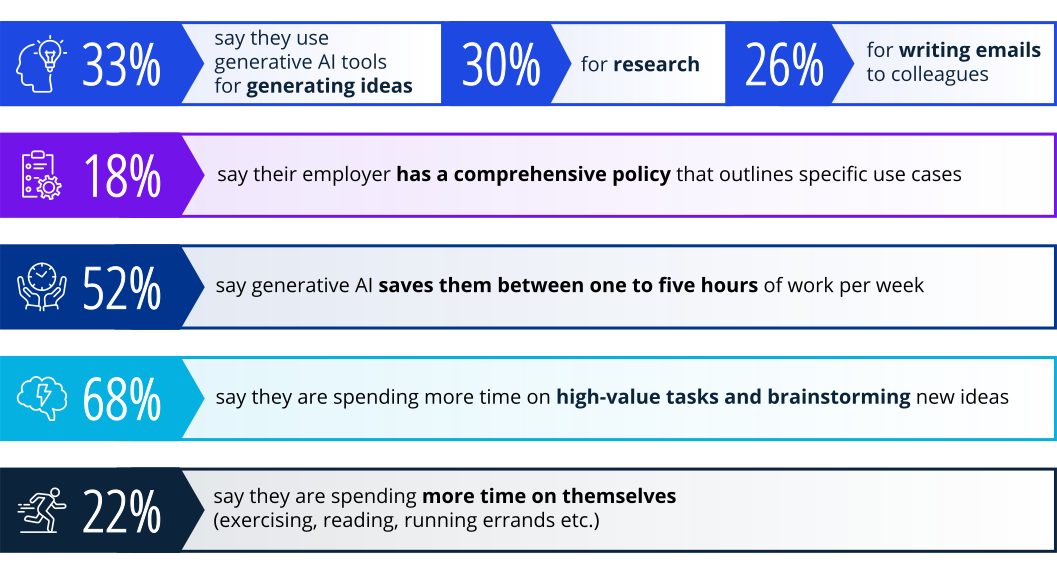
Nearly half (46 per cent) of Canadian workers are using generative artificial intelligence (AI) in their jobs, up from 22 per cent last year, according to KPMG in Canada’s latest Generative AI Adoption Index survey. The Index now stands at 31.6, reflecting a 116 per cent adoption growth rate since November 2023. A score of 100 indicates mass adoption.
Yet, the survey of 2,183 Canadian employees found that while the technology is being used by more people – and more frequently, users are also engaging in more risky behaviour when entering prompts, potentially posing harm to their employers.
The findings show 24 per cent of users say they’ve entered proprietary company data such as human resources or supply chain information into public generative AI platforms (up from 16 per cent in 2023) and 19 per cent say they’ve entered private financial data about their company (up from 12 per cent).
“It’s great to see such a surge in employee adoption because we know generative AI boosts productivity, but employers really need to get ahead of this to ensure their employees don’t unintentionally release private or confidential data,” says Lewis Curley, Partner, People and Change practice at KPMG in Canada. "If organizations don’t implement guardrails and provide training around generative AI use, employees could inadvertently enter sensitive company data into generative AI tools, causing risks for their employers.”
The survey found that while over 50 per cent of users say their employer encourages the use of generative AI by building it into their project checklists, nearly 40 per cent say they are not aware of any controls from their employer over the use of generative AI.
“Not only is it crucial for organizations to have policies in place but they must also clearly communicate those expectations to their people,” says Mr. Curley.