Unlocking productivity starts with data, but not just any data. To drive productivity, organizations must transform raw information into actionable insights that empower people to make informed decisions at the speed of business.
But building this capability takes time. It requires running pilots and establishing best practices, which can then be rolled out to other parts of the organization. By moving away from reactive approaches and taking a proactive stance, Canadian organizations can maximize the value of their information and boost team productivity.
How to turn data and analytics into a powerful asset
Many organizations already possess vast amounts of data, and with the rise of Generative AI, this now includes large volumes of unstructured data such as heavy text, audio and video. The true value comes from integrating and connecting these sources. This enables organizations to uncover inefficiencies and identify new opportunities for value creation.
For instance, Canadian transportation companies are applying predictive analytics to fleet management by analyzing sensor data—such as GPS routes, fuel consumption, braking patterns, and wear indicators—to predict brake failures weeks in advance. This proactive approach reduces costly roadside repairs, prevents delivery delays, and improves safety.
In private equity, firms increasingly rely on advanced analytics, AI, and generative AI during due diligence to process large data sets at a faster pace, uncover hidden risks, and validate performance metrics. Strong data governance and readiness are now essential for achieving target valuations and securing deals.
Data underpins everything from advanced analytics to artificial intelligence, helping to streamline operations and drive innovation. When Canadian businesses invest in their data, they give their people a competitive edge. Proactively preparing and connecting data enables organizations to maximize the impact of their teams.
What’s hindering impact
While interconnected data can boost productivity, fragmented data often has the opposite effect. Siloed data across departments and platforms makes it harder to glean actionable insights. Duplication of data leads to duplicated effort and higher costs, such as increased cloud computing, while poor data quality can result in conflicting “sources of truth”, leading to flawed decision-making that hinders productivity. Deciding on a single source of truth often becomes a tedious exercise that requires tracing data lineage and performing quality checks, which can be a significant challenge for organizations.
Many leaders expect analytics and AI to deliver instant results or magically produce clean, organized data. AI can help, but not solve everything. Without proper data discovery and preparation, these tools are underutilized. The real value comes from integrating and connecting data sources, not just accumulating them.
Where to start
As your organization becomes more data-driven, consider asking the following strategic questions about your organization and your people:
- Do we have a clear, organization-wide data strategy and a roadmap for integrating fragmented sources? How mature is our data? How effectively are we collecting, managing, analyzing, and using data?
- How often are our decisions truly informed by data rather than intuition or approximations?
- Are our people receiving periodic data and AI literacy training?
- Are we as innovative as we could be and are we using data to its fullest potential?
- Do we know what data we have and the ones we are missing?
- Will our infrastructure support our data maturity transformation?
- How are we standardizing data formats, centralizing data, and connecting different systems?
- Do we have a robust and scalable data governance framework that defines rules and ownership?
- How are we integrating data sources into multimodal generative AI tools?
- Are we following a responsible AI framework for data accuracy, confidentiality, and privacy in AI tools and models?
- Do we have the right controls in place to monitor this framework?
- Do we need a Chief Data Officer (CDO), and do we have the requisite skills in-house?
- Do we have a formal data policy and, if so, has it been communicated to our people?
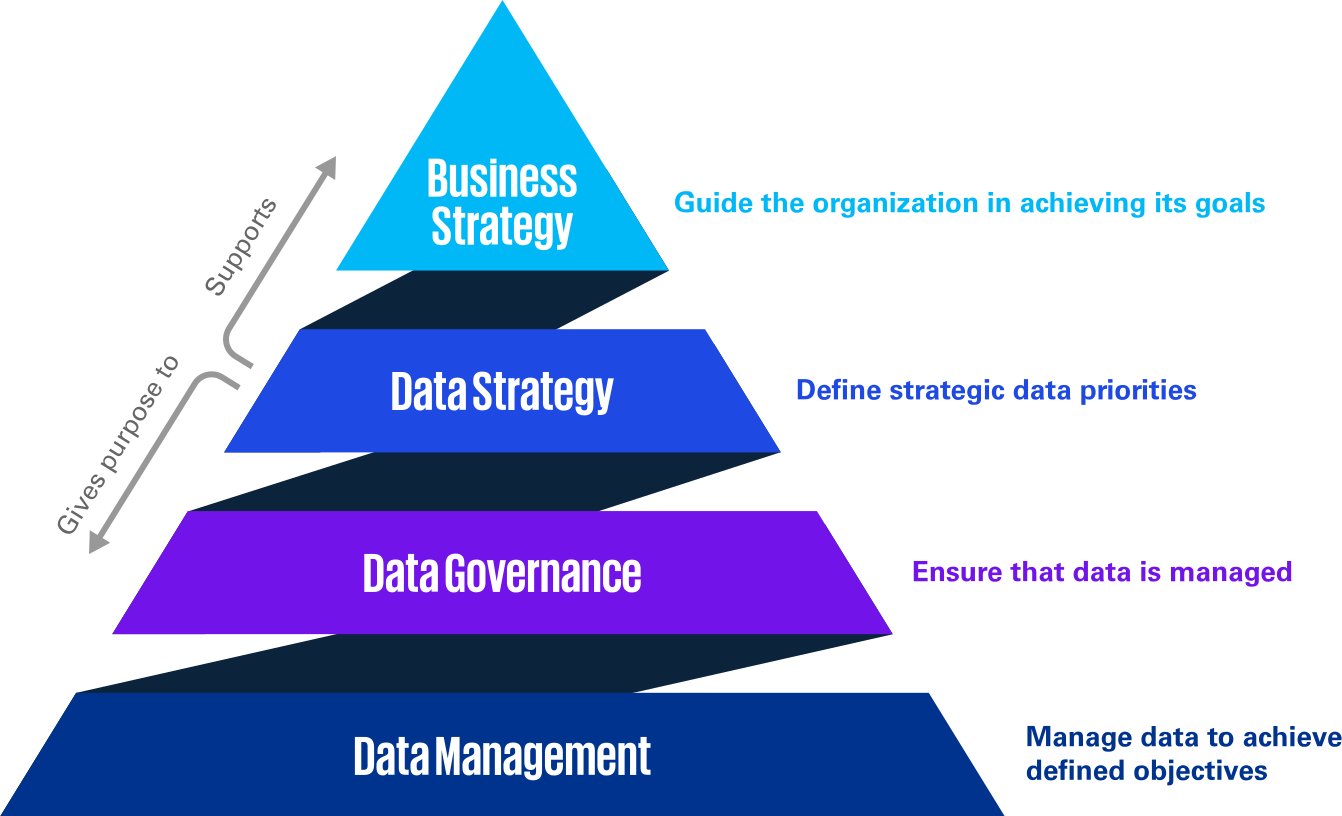
By addressing these questions, leaders can lay the groundwork for a formal data strategy that effectively supports advanced analytics and AI efforts. A strong data strategy should be rooted in, and cascade from, the business strategy to ensure alignment. If you’ve recently refreshed your strategic plan, that’s an ideal starting point. Begin by clarifying your objectives—are you focused on growth, enhancing customer or employee experience, or driving efficiency? Identify the strategic initiatives tied to those objectives and determine which data is essential to bring them to life or to assess your current position. These insights form the foundation of your data strategy and help maintain focus during execution. Once your strategy is defined, secure leadership approval, communicate it broadly, and reinforce it consistently across the organization.