

Across all sectors, cost optimization has become a priority for leaders navigating accelerated rates of change, increased compliance obligations, and increasing client and internal stakeholder expectations.
At its core, cost optimization is not about aggressive cost cutting or short term austerity. It is a strategic, structured approach to managing cost while protecting and enhancing the value the organization delivers. When done well, it enables leaders to realign resources to where they matter most, improve operational discipline and unlock the capacity needed to accelerate transformation. Yet cost optimization can become a pitfall when pursued in isolation or without visibility into the full operating environment, leading to unintended impacts on service, talent or long term competitiveness. With the right approach, however, it presents an opportunity to simplify complexity, strengthen decision making and fund future growth. This insights hub brings together the key considerations, insights and actions to help you get started or optimize your current approach.
Receive insights, events and more to your inbox
Organizations today must navigate a complex landscape of evolving cost pressures, including:

The cost optimization journey
Organizations frequently move through cycles of cost containment followed by cost “creep,” where initial savings fade and underlying issues resurface. Successful programs, however, shift away from reactive exercises and toward a structured, multi‑phase journey that balances tactical wins with longer‑term transformation.
The journey begins with rapid visibility and quick wins, often delivered within weeks, focusing on straightforward levers that stabilize the cost base and demonstrate early momentum. From there, organizations broaden their focus to more medium‑term solutions, addressing process redesign, new ways of working, automation, and technology enablement. Over time, this evolves into longer‑term transformation, modernizing operating models, strengthening governance, enhancing data and analytics capabilities, and redesigning the end‑to‑end value chain.
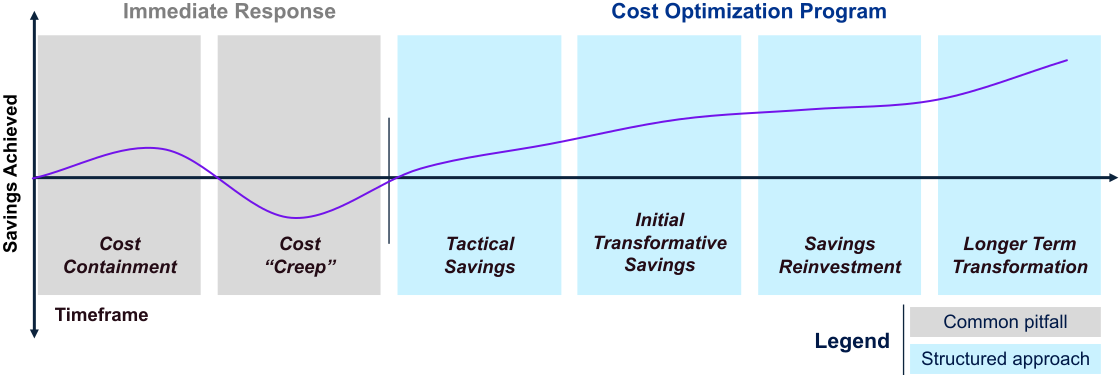
Sustainable cost optimization requires discipline, sequencing, and a clear understanding of interdependencies. Programs grounded in data and supported by robust governance outperform those driven solely by budget pressure. When savings are reinvested into modernization, rather than absorbed into the baseline, organizations create lasting advantage and avoid the common pitfalls that lead to recurring cost challenges.

Key levers for long‑term cost and performance impact
As organizations progress along the cost optimization journey, the focus naturally shifts from short‑term stabilization to understanding which levers can drive sustained performance improvement. While every enterprise faces its own operational realities, three macro cost lenses offer a clear framework for identifying where value is created, where it is lost and where meaningful change can occur. These lenses help translate visibility into action, shaping the decisions, investments and redesign efforts that support long‑term efficiency, resilience, and growth.
Focus on markets, products & business models that deliver the greatest customers and stakeholders value.
Value creation opportunities may include:
- Optimizing geographies, market presence and product portfolios to eliminate low performing segments
- Realigning the operating model and balance sheet to support priority capabilities
- Shifting investment toward high value growth areas while reducing exposure to low yield activities.
Ensure organizational accountability and governance structures enable efficient decision-making and operational agility.
Value creation opportunities may include:
- Streamlining organizational structures and refining delegated authority models
- Strengthening transformation governance to improve coordination and execution
- Enhancing cost management routines to reinforce clear ownership and enterprise wide discipline.
Optimize how your organization delivers value by rethinking processes, technology, data, channels and existing third-party service delivery models:
Value creation opportunities may include:
- Improving operational efficiency through digitization, automation and redesigned workflows
- Enhancing channel performance through analytics driven segmentation and distribution optimization
- Modernizing technology environments, including cloud migration, platform consolidation
- Optimizing system / application / platform / data licensing
- Rationalizing physical assets, improving utilization, and reducing footprint where feasible
- Strengthening vendor and sourcing management to consolidate spend and renegotiate value
- Streamlining regulatory, governance and risk compliance processes without compromising assurance.
Across industries the balance of these levers may shift, but the underlying approach remains consistent: clarify strategic focus, simplify where complexity impedes value, and engineer more efficient and scalable ways of working.
Ready to optimize your cost program? We’re here to help.
Organizations looking to advance their cost efforts can access targeted support that moves from insight to execution with clarity and discipline. Our offerings span rapid diagnostics, operating model and process redesign, technology and sourcing optimization, and benefits tracking, supported by structured delivery, strong governance, and transparent measurement.
With global experience, advanced tools, and collaborative teams, we help organizations turn cost priorities into sustainable outcomes.
Insights


Connect with us


David Bardsley
Partner, National Service Line Leader, Customer and Operations and National Sector Leader, Wealth & Asset Management
KPMG Canada


