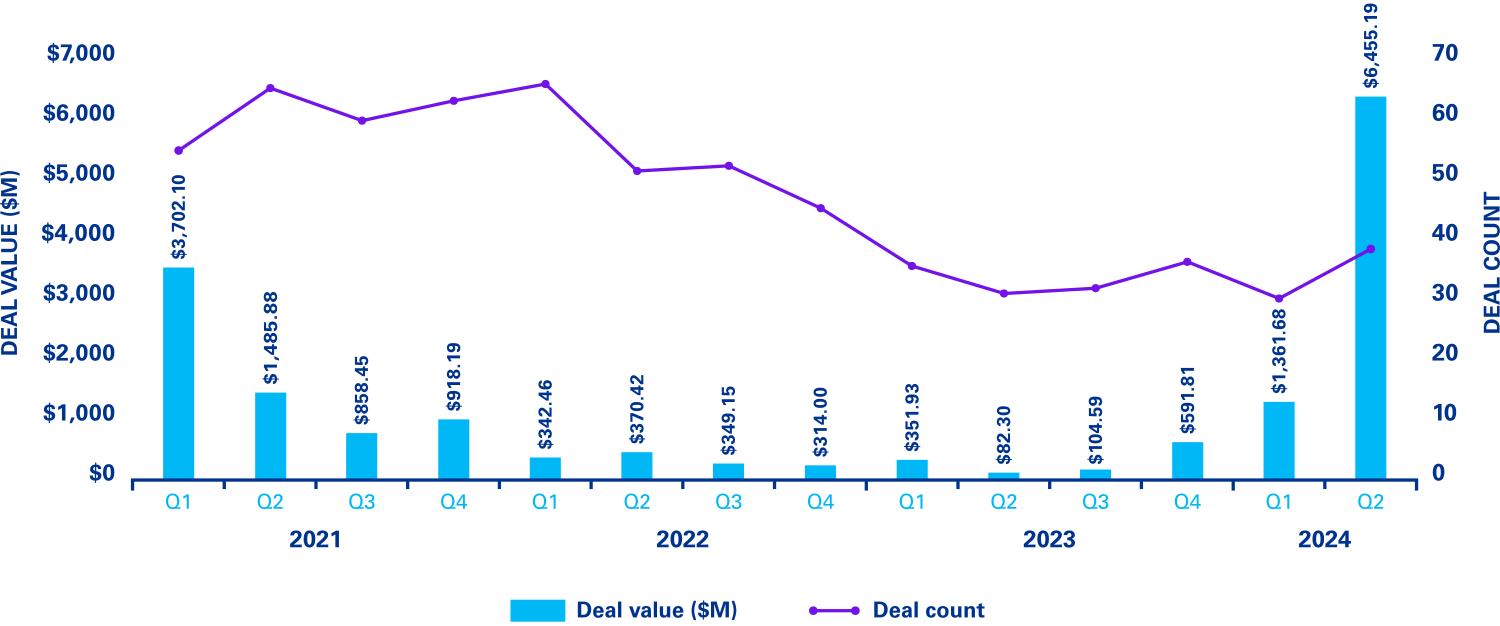
Two large private equity buyouts propelled the total value of investments in Canadian fintechs to a new high in the first six months of the year amidst a broader persistent slump in Canadian and global investment, according to KPMG International's H1'24 Pulse of Fintech report.
A record US$7.8 billion was invested in Canadian fintechs in the first six months of 2024, up more than seven-fold from last year's full-year total of US$1.1 billion. Private equity investments into two Montréal-based fintechs – Nuvei Corp. and Plusgrade Inc. – accounted for as much as 94 per cent of the total value invested in Canada – and were also among the biggest five deals globally.
"These two Canadian deals – among the biggest in the world – reflect the growing fintech ecosystem in Montréal and Quebec more broadly, where the startup scene is thriving thanks to support from institutional investors, and world-class universities are providing a steady stream of talent," says Georges Pigeon, a partner in KPMG in Canada's deal advisory practice in Montréal who specializes in financial services.
Nuvei's US$6.3 billion take-private deal was the largest in Canada, and the second largest globally. A consortium led by American private equity firm Advent International Corp., along with Novacap Management Inc., Caisse de dépôt et placement du Québec (CDPQ) and Nuvei chair and chief executive Philip Fayer acquired the Montréal-based payment technology firm in April.
In March, New-York based General Atlantic invested US$1 billion into Montréal-based Plusgrade, a software provider to the travel industry – making it the second largest deal in Canada and the fifth largest globally. The investment saw Novacap exit its stake in the Plusgrade, with CDPQ remaining a significant shareholder.
Excluding those two deals, total investment was US$516.8 million, down 26 per cent from the US$696 million invested in the second half of last year, and up nearly 20 per cent from the US$434.2 million invested in the first half of 2023.
Mr. Pigeon says after two years of relatively weak investment in Canadian fintechs, activity could begin to bounce back in the next six months. "Over the past few weeks, we have already seen a number of significant investments and M&A activity take place in Canada, which suggests that the dealmaking environment could be on a path to normalization soon – although it won't return to the record level of investment we saw in 2021," he said.
Recent investments such as digital mortgage lender nesto Inc.'s acquisition of CMLS Group, CGI Inc.'s acquisition of Celero's credit union business, and Clio's recent US$900M Series F raise could could signal a potential pickup in deals, Mr. Pigeon notes.
"One trend we expect to see is that of well-funded fintechs acquiring traditional financial services companies. In that scenario, the target company can transform itself by upgrading its technology more quickly than a situation where it has to figure out how to absorb and integrate the fintech."
Of the 65 investments in the first half, 46 were venture capital investments worth US$264 million. The largest VC investment was Brim Financial's US$62.8 million series C funding round in April. Corporate venture capital investments accounted for one quarter of all VC activity, with 12 deals worth $143 million.