User training & Adoption Time
Another important consideration when choosing between a comprehensive platform and multiple tools is the time required to train your helpdesk personnel, administrators, and users. The duration it takes for them to become proficient with the tools is a significant factor as well.
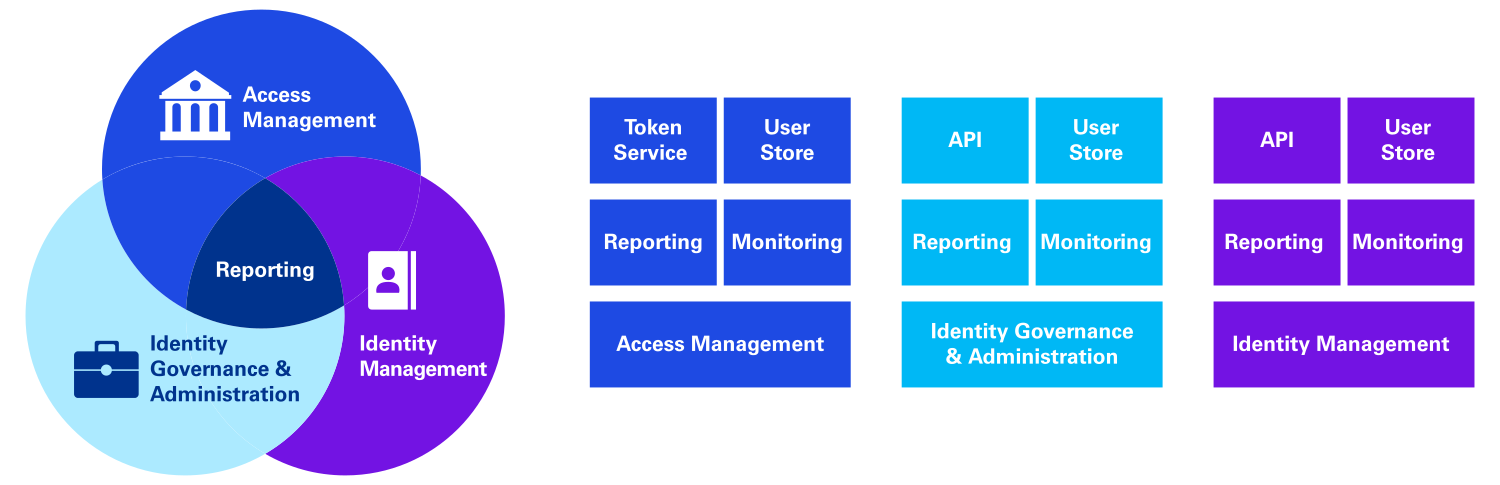
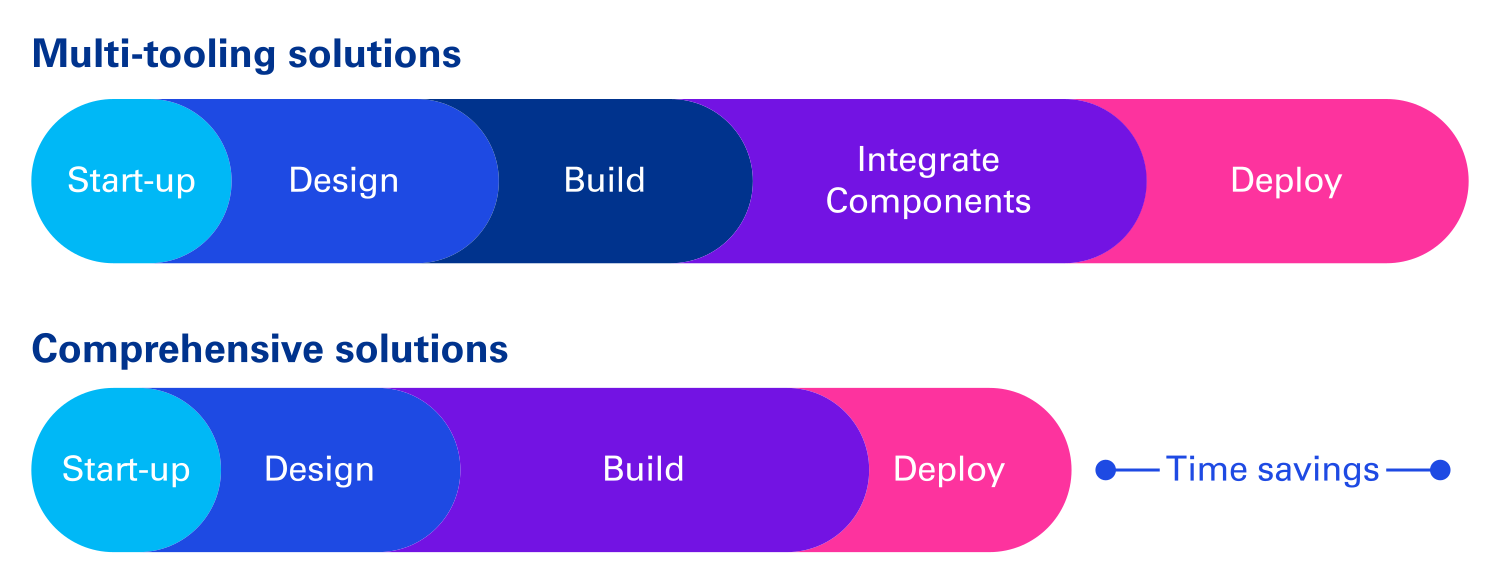
In many cases, companies that opt for multiple-tool deployment experience longer user training and adoption times compared to those using a comprehensive IAM platform. Comprehensive platforms often have user experience and workflow paths integrated into the software from the start, making it easier for users to navigate and perform actions efficiently.
A disadvantage of the multi-software deployment approach is the need for users to interact with various components individually, as opposed to a comprehensive user interface provided by a single platform.
Support
An important but sometimes overlooked aspect in the decision-making process is determining the level and level of support you will receive for your IAM systems. If you opt for a multi-software approach, you might encounter issues that arise between the different platforms you have chosen, making it challenging to receive support for these problems. Often, the support personnel for one tool may be unfamiliar with how another tool interacts with their system, complicating the resolution process.
In contrast, with a comprehensive IAM platform, you have a single point of contact for support, which simplifies the process of addressing issues. Problems are typically localized to the product itself, making it easier to receive straightforward and effective support.
Future proofing
A last point to consider is how future-proof a potential solution or product is, particularly in terms of upgrade cycles and features. When we talk about features, we often refer to advancements such as Machine Learning AI capabilities or Identity Threat Detection and Response (ITDR) integrations. But these can also be advancements into processes or flows that become available on platforms to further support certain industries or markets.
The upgrade cycle also varies depending on your choice of programs. Comprehensive IAM platforms often provide bundled maintenance upgrades, ensuring that all components are updated simultaneously. In contrast, with multi-software setups, where you might encounter situations where you need to delay patching one product because another product has not yet completed its bug-fix cycle. This can result in the need for multiple maintenance windows instead of just one, complicating the upgrade process.
Besides the actual upgrade cycle, feature roadmap is another important pillar on which companies often make decisions on for what to go to. Comprehensive IAM platforms often have a very broad feature range that they deliver to their customers as to be as generic as possible. While software used in multi-software environments often try to focus on a certain section of the market and tailor their features more towards that market. However, some of these have started a shift as well into becoming more of a comprehensive IAM platform.
Conclusion
Both multi-software setups and comprehensive IAM platforms can make sense for corporations, depending on their specific use cases and organizational needs. The decision largely hinges on factors such as the complexity of IAM processes and the unique requirements of the organization.
Some factors, like the availability and capacity of developers, can also play a significant role in this choice. It's important to make a well-considered decision on the direction your organization should take. Trying to make or justify this decision can be tricky. We encourage you to reach out to see how we can help your organization define the next steps of its IAM program.
In terms of long-term strategy, the trend of vendors evolving into a one-stop identity platform is not going to stop anytime soon. Going with a financially stable and technically sound vendor will become crucial. Financial distress is an important decision factor, given an IAM solution will easily run for 10 to 15 years in your organization.
For now, we see only a couple of mature IAM players left in the market: SailPoint, Omada, Saviynt, OKTA, Microsoft, and CyberArk. Most others are currently challengers or have potential financial due diligence objections.
Author: Sébastiaan Verheyen, Advisor