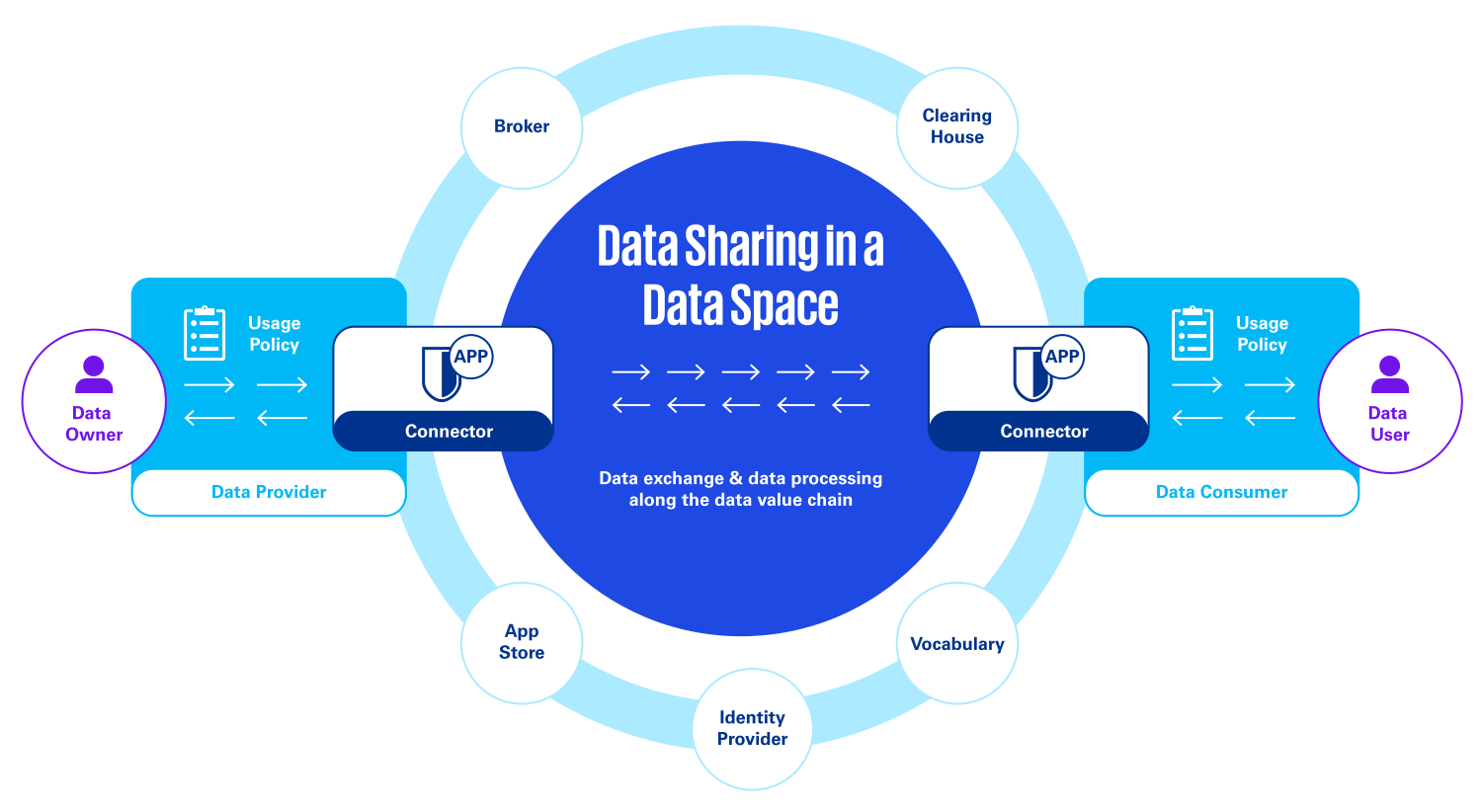
The goal of data collaboration is to derive value from data, and as such, the data users are central to the whole operation of the data space. These data users can be a variety of profiles, from analysts to researchers or policy makers. Given this potential diversity, it is important to provide them a user-friendly way of getting access to data. An intermediary data consumer, either organization or system, can support them.
By verifying their identity with an identity provider, they gain access to the data space. To find the data they are looking for, one or more brokers offer a data catalog with detailed information about the data available and how it can be used as defined by usage policies. They also include a (semi-)automated process for requesting access to data. Recurring data requests may be operationalized as an “app” or service in a marketplace-like app store to provide automated and integrated access.
The data owners provide the data, supported by data providers as an intermediary. They define the usage policies of individual data assets, including for example any pricing associated. Data is offered in an interoperable way to facilitate usage and linking, following agreed upon standards and vocabularies.
Once the data is exchanged as part of the data request, the data providers and consumers leverage secure connectors to share the data directly, bringing to life the decentralized nature of the data space. The clearing house follows up on these transactions, performing monitoring, logging, and settling any legal or financial matters.
None of these contributors need to be singular. Multiple actors with the same role can co-contribute within a data space, provided they collaborate within established cooperation agreements through process, technical and legal interoperability. The term “prosumer” is frequently used to highlight the fact that organizations often can assume the role of both data users as well as owners, benefiting from data collaboration in both directions.
In turn, data can be shared in and across multiple data spaces. Interoperability is the foundation for enabling cross-domain data collaboration across data spaces. Machine-to-machine interoperability ensures this can be automated as much as possible, streamlining operations and reinforcing trust within the data space.