Most finance failures don't announce themselves. They accumulate.
An invoice overpayment caught at the last minute. A purchase order mismatch buried under manual corrections. An undocumented workflow that surfaces only when auditors arrive. Each incident feels like isolated "operational friction." But together, they tell a different story, one of structural fragility that, in 2026, has officially crossed the threshold from operational inconvenience to strategic risk.
This article is for leaders who suspect their current processes are quietly costing more than they realize, and want a clear path forward.
Why: The hidden cost of manual processing
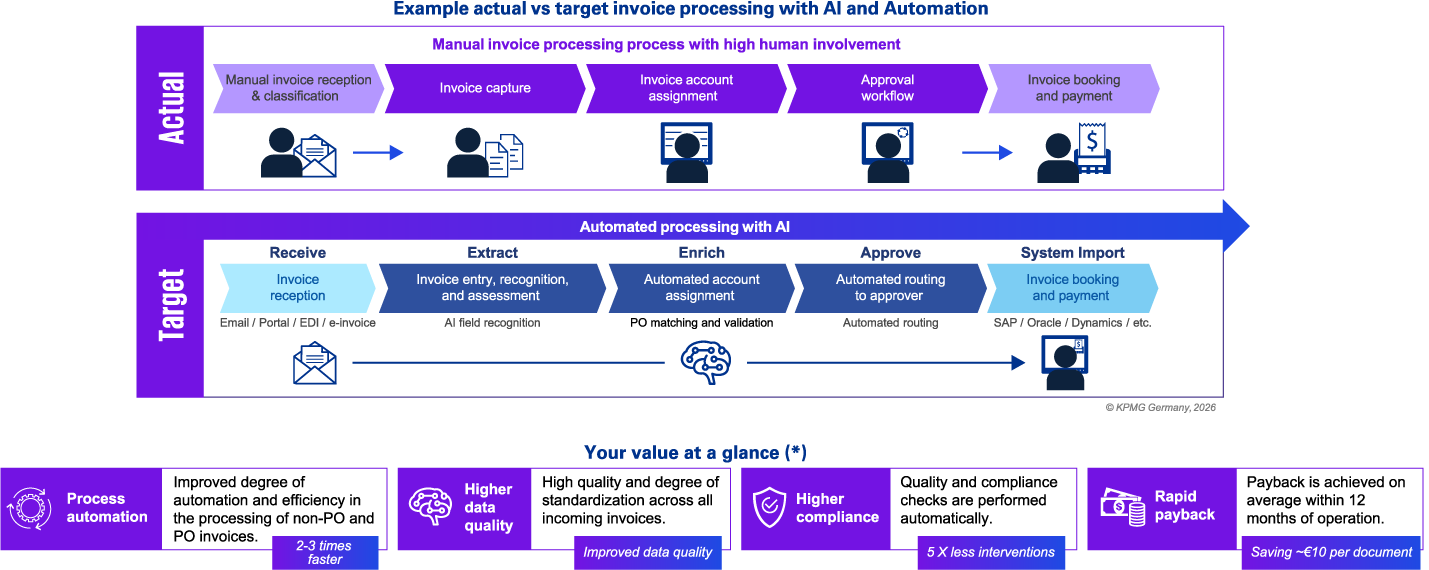
Finance teams are drowning in documents. Invoices, purchase orders, contracts, remittance advices, and delivery notes, each requiring someone to open it, read it, key data into a system, chase an approver, and file it away. Multiply that by thousands of transactions a month, across multiple entities, currencies, and suppliers, and the scale of the problem becomes clear.
The real cost isn't the occasional error. It's the structural inefficiency baked into every step of the process:
- Experienced finance professionals devote most of their time to entering, verifying, cross-checking, and matching data, rather than focusing on analysis;
- Approval bottlenecks caused by missing information that could have been validated automatically;
- Duplicate payments and overpayments that slip through when matching is done manually under time pressure;
- Month-end close delayed because reconciliation depends on people chasing data and documents instead of systems surfacing exceptions; and
- Audit preparation that requires weeks of manual evidence gathering because there is no single, auditable process trail.
These aren't edge cases. For most finance functions, this is Tuesday. And the cumulative cost, in staff hours, error rates, missed early payment discounts, and compliance exposure, is significant and largely invisible on any single line of a budget.