What does this mean for companies?
“First and foremost, it’s important to know that the EU Taxonomy is a mandatory disclosure exercise for companies that are in scope,” says Walter Jacob, Senior Counsel at KPMG Law. “Since its introduction in 2020, it has primarily affected larger companies with 500+ employees. However, when the Corporate Sustainability Reporting Directive (CSRD) comes into effect in 2026, the scope of companies required to comply with EU Taxonomy regulation will widen to also include companies with 250+ employees, exceeding EUR 20 million net turnover and exceeding EUR 40 million balance sheet total (2 out of 3 criteria to be met). We therefore recommend that executives already take the opportunity to prepare for this eventuality, so that there is the maximum time available to invest strategically and allocate the necessary resources before the disclosure data is required.”
“Many companies struggle with a lack of EU Taxonomy data,” says Filippo d’Eufemia, Sustainability Manager at KPMG Advisory. “For starters, they need to identify, collect, and report data related to turnover, capital expenditure, and operational expenditure connected with environmentally sustainable economic activities. Implementing the processes to collect and analyze relevant, high-quality data in these areas can be a challenge, especially for companies that are starting from scratch.”
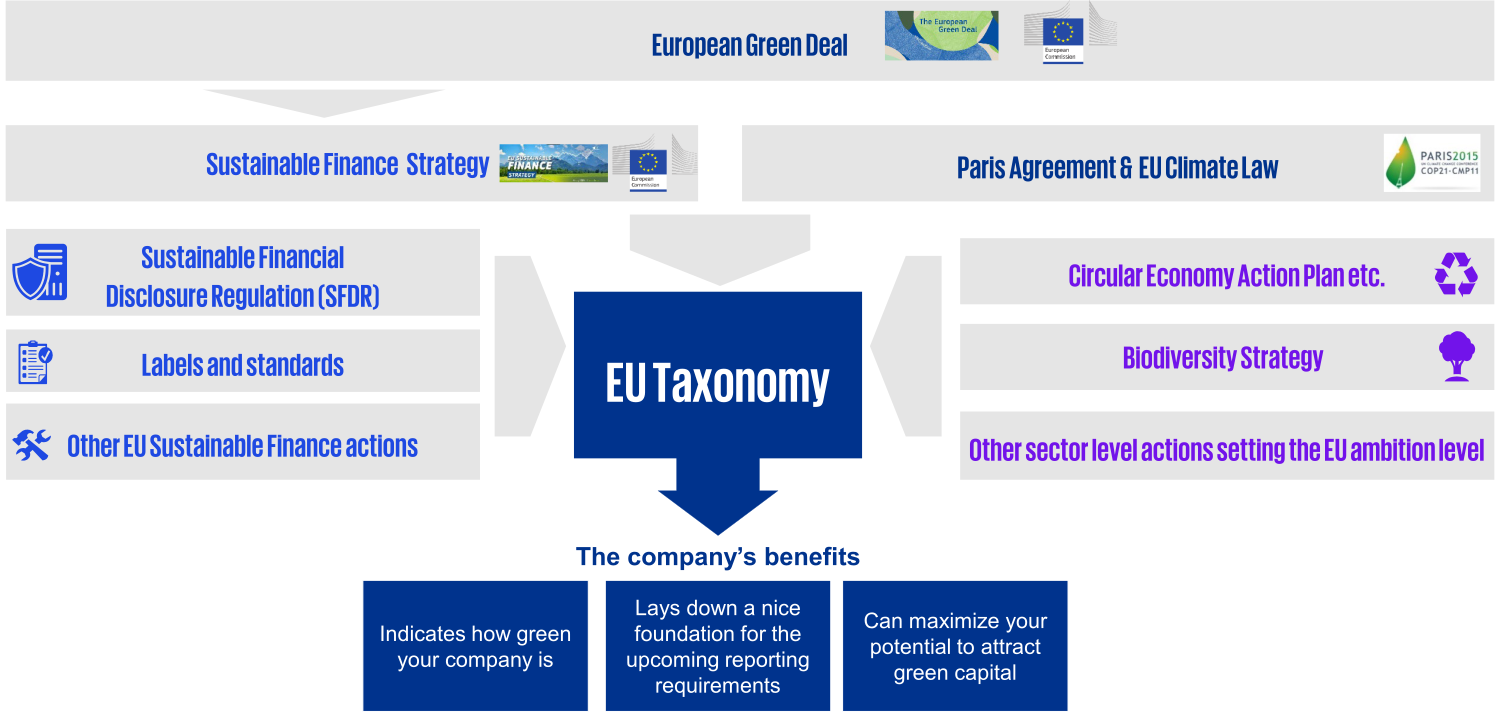
“The good news is that investments in this area are worthwhile,” says Walter. “Not only does it send a strong signal to investors, employees, customers, competitors, and regulators that your environmentally sustainable economic activities are credible, but it also helps to provide the foundation for fulfilling your current and future annual reporting requirements.”
“The key word here is credibility,” says Filippo. “By requiring a standardized approach to sustainability disclosures under the EU Taxonomy, this regulation takes a data-based approach to help separate the companies that are truly performing well in their ESG activities from those that still have some catching up to do. Having access to this information also provides greater security for investors, executives, and managers when making strategic decisions about where to direct their resources.”
What are the current requirements?
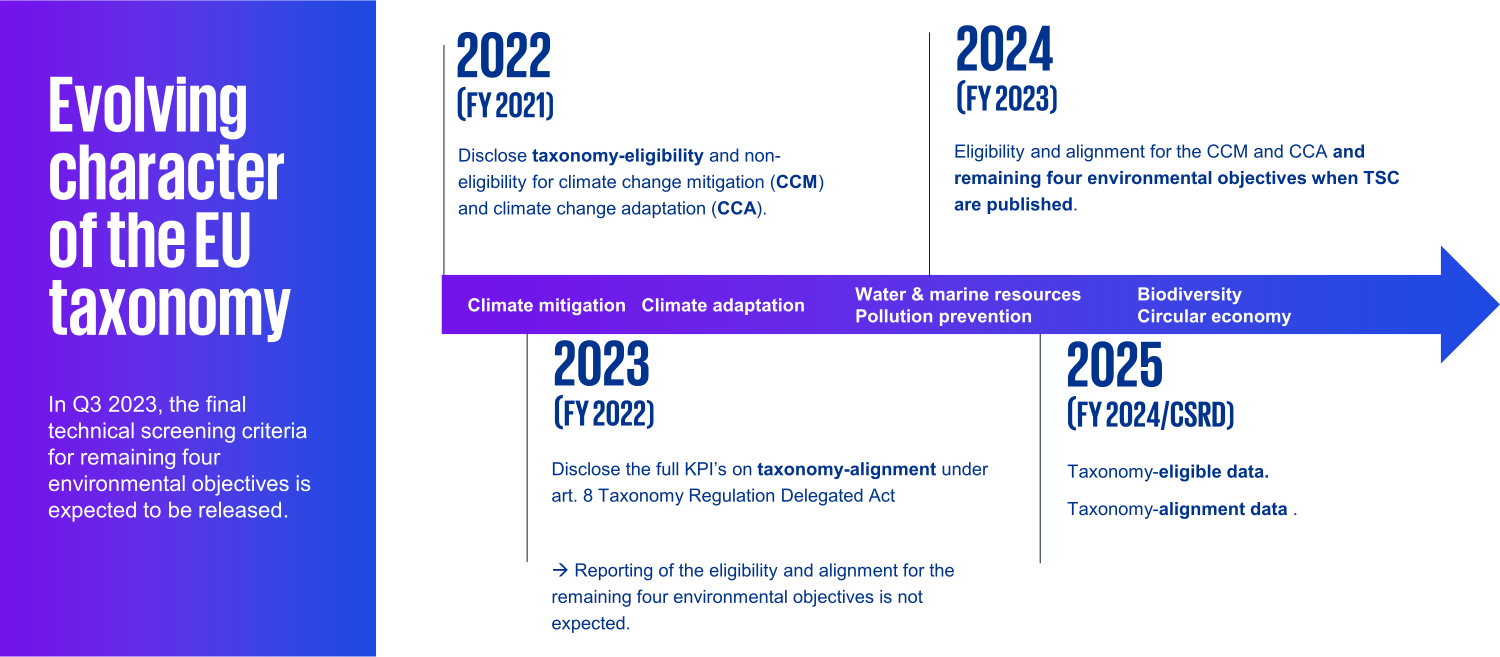
“At present, companies in scope of the EU Taxonomy are required to report from two perspectives: eligibility and alignment,” says Walter. “In this context, ‘eligibility’ means identifying and disclosing which of the company’s activities are potentially sustainable according to the screening criteria outlined in the Taxonomy, whereas ‘alignment’ involves testing and disclosing whether these activities do in fact meet the Taxonomy’s technical screening criteria for them to be considered eligible, as well as demonstrating a significant contribution to the relevant Taxonomy objective, compliance with the ‘Do No Significant Harm’ principle and Minimum Safeguards.”
“For example,” he continues, “when a company undertakes an exercise to renovate a building to improve its energy-efficiency using more sustainable insulation, this activity could be considered ‘eligible’ for technical screening and included as a sustainable activity in the company’s EU Taxonomy disclosures. ‘Alignment’ would then mean testing whether the materials subsequently used for the building’s insulation are fit-for-purpose and meet the technical sustainability requirements necessary to achieve the targeted energy efficiency gain. To ensure standardization can be achieved across different companies and sectors, the testing criteria used to determine eligibility and alignment are detailed in the relevant section of the Taxonomy.”
How soon do companies need to submit EU Taxonomy disclosures?
“The introduction of the EU Taxonomy has taken a gradual approach,” says Filippo. “As it currently stands, in 2024, companies in scope of the EU Taxonomy are required to report on eligibility and alignment with objectives one and two: i) climate change mitigation and ii) climate change adaptation, as well as the eligibility of their activities for objectives three, four, five, and six: iii) sustainable use and protection of water and marine resources; iv) transition to a circular economy; v) pollution prevention and control; and vi) protection and restoration of biodiversity and ecosystems.
From 2025 onwards, companies in scope will be required to report on eligibility and alignment with all six EU Taxonomy objectives.
“But it doesn’t end there,” says Walter. “When the CSRD also comes into effect as from financial year (FY) 2025, the scope of companies required to report on all the above EU Taxonomy objectives will widen to include the so-called large companies. From that time onwards, all companies in scope of the EU Taxonomy and CSRD will also be required to provide independent assurance of their non-financial and EU Taxonomy disclosures within their annual report.”