
The global food system has been long-standing in its current process, but now with the threats from environmental, social, and economic pressures, a transformative approach is necessary to ensure sustainability and equity. Through this transformation, there is an opportunity for businesses to derisk, diversify and differentiate themselves in tandem with bettering the food system through strategic planning. Every business should be concerned with the future of the food system, and the impact it will have on their operations and revenue.
Reimagining Global Food System Resilience explores the interconnected nature of food systems with every person and organization on the planet, discussing the challenges and resilience in food production and the collaboration needed across various sectors to enhance food security. Each sector contributes unique strengths that improve the overall resilience of food systems, and this combined approach leverages diverse expertise, creating a robust food system capable of enduring challenges and ensuring sustainability for future generations.
This report ultimately serves as a call to action for leaders across sectors to collectively work towards a resilient food future — one that prioritizes sustainability and equity while ensuring that everyone has access to nutritious food.

Belgium’s food sector is at a crossroads, facing major challenges but also real opportunities to build resilience. At KPMG, we help Belgian food companies harness innovation, strengthen collaboration, and embed sustainability into their operations. With local insight and a global perspective, we equip businesses to thrive in a changing world. By working together across the value chain, we can create food systems that are robust, adaptable, and beneficial for communities, the environment, and future generations.
Exploring food futures together
"It’s a matter of thinking about how you can play a role in making our food system more resilient." Ian Proudfoot
Join Isabelle Allen, Global Head of Consumer & Retail, KPMG International and Ian Proudfootopens in a new tab, Global Head of Agribusiness, KPMG International and Partner, Audit, KPMG in New Zealand as they share personal insights and experience from their research.
The report highlights the benefits for businesses to get involved
Identify hidden risks and future-proof operations
Uncover how food system disruptions could impact supply chains, workforce stability, and long-term performance.
Discover new growth and investment opportunities
Explore emerging markets, technologies, and circular economy models linked to food system transformation.
Enhance ESG performance and stakeholder trust
Align business strategy with global sustainability goals, regulatory trends, and consumer expectations.
Build resilience through cross-sector collaboration
Find actionable pathways to partner across industries and strengthen systemic resilience for shared value creation.
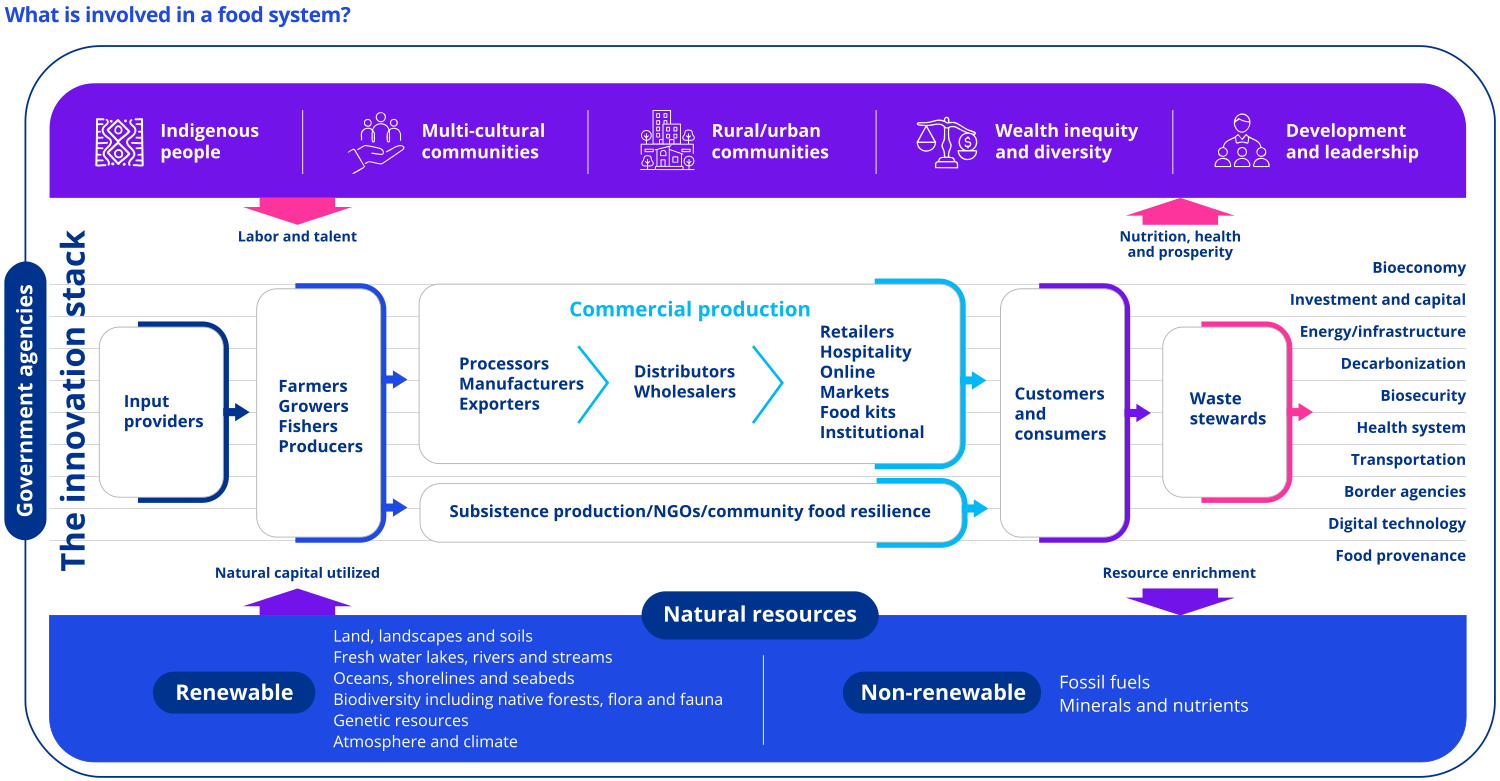
What is the food system?
A complex network that does far more than supply what ends up on our plates. It underpins energy and productivity, supports health through nutrition, and relies on agriculture, horticulture, and aquaculture working in alignment with nature. Every aspect of it connects us to the soil, water, air, oceans, and ecosystems that sustain life on the planet.
Methodology
To better understand the priorities, aspirations, and visions of senior executives across industries directly shaping the food system's future, KPMG undertook a comprehensive global leaders survey with over 200 people responding via in-depth interviews. The subsequent qualitative findings below in part one goes beyond the obvious, uncovering nuanced perspectives and unexpected insights that reveal the complexity of reimagining how we produce, distribute, and consume food.
Explore



Connect with us
- Find office locations kpmg.findOfficeLocations
- kpmg.emailUs
- Social media @ KPMG kpmg.socialMedia