The 2025 KPMG CEO Outlook reveals a striking sense of optimism across the Middle East, even as global business leaders navigate persistent geopolitical, economic, and technological volatility. CEOs in the region remain notably more confident about their organizations’ prospects than their global peers — a reflection of both structural resilience and a forward-leaning commitment to innovation.

      Across the region, business leaders are recalibrating growth strategies to respond to a world defined by interlinked risks — from inflation and supply chain constraints to cyber threats and regulatory complexity. Yet the prevailing mood is one of resolve and opportunity. Most CEOs anticipate revenue and headcount growth over the next three years, driven by sustained investment in technology, digital infrastructure, and workforce transformation.

      Artificial intelligence continues to dominate strategic priorities. A significant majority of regional CEOs have already integrated AI into their operations or are accelerating deployment plans. Confidence in governance, data quality, and responsible use is particularly high, signalling maturity in digital transformation and readiness to capture value from next-generation technologies.

      The human dimension of transformation remains central. CEOs are reshaping roles, reskilling teams, and building agile, tech-savvy cultures capable of sustaining long-term competitiveness. With young, dynamic populations and ambitious diversification agendas, the region’s economies are positioning themselves as global exemplars of how digital transformation can coexist with people-led growth.

      Sustainability and ESG considerations are also becoming embedded in strategy. Regional leaders increasingly view climate goals not merely as compliance obligations but as pathways to growth and innovation. Confidence in meeting evolving ESG requirements is higher than the global average, and the integration of sustainability with AI and data analytics is opening new opportunities for transparency, efficiency, and impact.


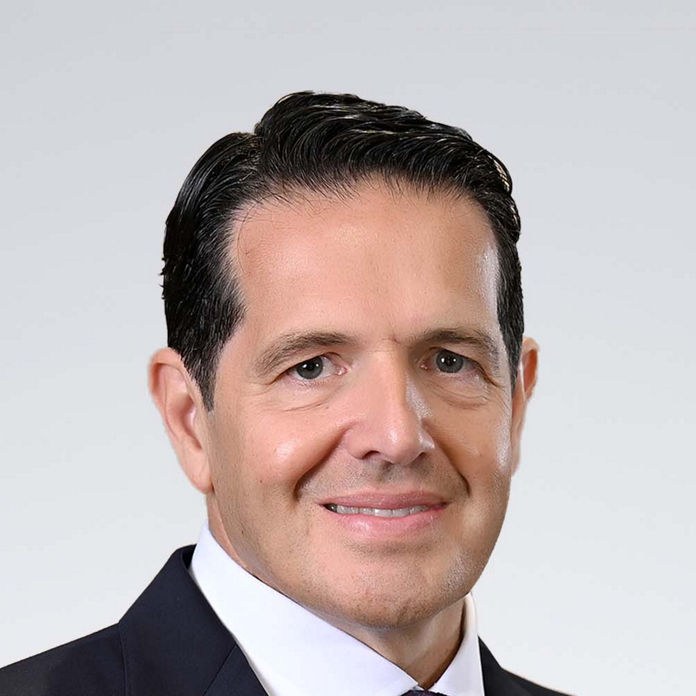
      The findings show that CEOs across the Middle East are turning disruption into opportunity — investing boldly in technology, innovation, and talent to drive growth. In both Saudi Arabia and the UAE, we’re seeing strong confidence and a clear commitment to responsible innovation, particularly in AI, where leaders are coupling ambition with solid governance and upskilling strategies. There’s an increasing understanding that balancing innovation with responsibility is key — ensuring progress on ethics, regulation, and workforce readiness keeps pace with technological change. Those who align digital transformation with their people and sustainability agendas, and invest strategically in the right areas will be best positioned to unlock new opportunities and deliver long-term, sustainable growth.

      Dr. Abdullah Al Fozan

      CEO, KPMG Middle East


      CEOs in the United Arab Emirates continue to express among the highest levels of business confidence worldwide. 80% are optimistic about their company’s three-year growth outlook, and 84% report confidence in the national economy, compared with 81% globally. This optimism is supported by robust domestic demand, fiscal stability, and ongoing investment in innovation and technology.

      The UAE stands out as one of the world’s most AI-ready economies. Over half (52%) of CEOs say AI integration is a top investment priority, far exceeding the 34% global average. Confidence in governance and deployment is strikingly high: 92% believe their organizations are ready to deploy AI responsibly. With initiatives such as K2 Think, a 32-billion-parameter open reasoning model launched by MBZUAI and G42, the UAE is shifting its AI strategy from “bigger” to “smarter” — prioritising efficiency, reasoning, and open collaboration.

      Human capital development is keeping pace with this technological acceleration. 84% of UAE CEOs expect to increase headcount over the next three years, and 80% are redesigning roles to reflect AI collaboration. This proactive approach reflects a wider national agenda focused on reskilling, innovation, and creating future-ready workforces.

      On the sustainability front, 44% indicate that related objectives are integrated with business strategy, and 76% see AI as a critical enabler of decarbonization, transparency, and performance improvement. National projects such as Masdar City and COP28-linked regulatory accelerators continue to make the UAE a leader in integrating technology and sustainability.


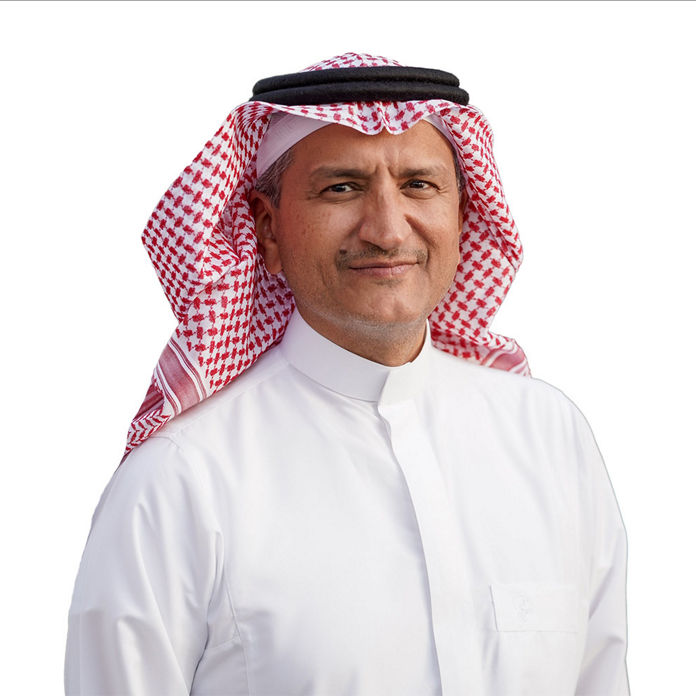
      CEOs are investing in AI with greater confidence — not just because of its promise, but because of the measurable value they are seeing and the rapid emergence of agents, making expected returns more accessible and scalable. Leading organizations are integrating AI into the core of their business strategies and investing in what’s needed for success: quality data, workforce readiness, and responsible AI governance built both for trust and agility.

      Emilio Pera

      Deputy CEO, KPMG Middle East


      Economic outlook

      CEOs remain optimistic despite global uncertainty

      In the UAE, business sentiment remains exceptionally strong, reflecting the country’s agile economy and stable fiscal environment. 80% of UAE-based CEOs are confident about their company’s three-year growth outlook, while 84% express confidence in the national economy — surpassing the 81% global average. Confidence in the global economy also exceeds global sentiment, at 72% versus 68%.

      Regional economic fundamentals reinforce this confidence. The IMF’s April 2025 Regional Economic Outlook highlights continued resilience in GCC non-oil activity, supported by infrastructure spending, foreign investment, and steady inflation around 2%. The UAE’s performance is buoyed by growth in tourism, logistics, renewable energy, and digital sectors — areas aligned with national diversification and sustainability goals.

      84% of CEOs in the UAE expect to increase headcount over the next three years. Such optimism is closely linked to the country’s role as a global innovation hub, with an economy increasingly driven by digital adoption, open markets, and international partnerships.

      Investment priorities reveal a forward-leaning mindset: 52% of CEOs cite AI as a top strategic focus (versus 34% globally), followed by 40% investing in cybersecurity and 32% in workforce upskilling. This pattern signals a commitment to embedding innovation and resilience into corporate strategy, ensuring agility amid global uncertainty.

      The UAE’s macroeconomic strength — underpinned by stable inflation, proactive fiscal policy, and continued capital inflows — supports this positive business sentiment. CEOs are leveraging these conditions to expand internationally, invest in technology, and align corporate growth with the national digital and green transformation agendas.

      Technology and AI

      CEOs forge ahead with AI integration while balancing risk


      The UAE’s private sector continues to distinguish itself as one of the most AI-ready economies worldwide. 52% of CEOs have made AI integration a top strategic priority — nearly 20 percentage points above the global average of 34% — and 92% are confident their organizations can deploy AI responsibly under well-defined governance frameworks.

      The country’s approach to AI has evolved from rapid adoption to strategic refinement — shifting from “bigger” to “smarter.” CEOs are not merely chasing scale but optimising AI for reasoning, collaboration, and efficiency. Nearly three-quarters (74%) of UAE leaders expect to realise returns on AI investments within one to three years, underscoring a pragmatic focus on measurable outcomes rather than distant ambitions.

      Board engagement is equally advanced. 80% of CEOs in the UAE report that their boards are fully prepared to oversee the adoption of advanced technologies, ahead of global peers. Corporate leaders also emphasize transparency and experimentation, with many encouraging open communication about the impact of AI on roles and skills.

      The UAE’s ambition to lead in next-generation AI was showcased in 2025 with the launch of K2 Think, a 32-billion-parameter open reasoning model developed by the Mohamed bin Zayed University of Artificial Intelligence (MBZUAI) and G42. Despite being significantly smaller than some global models, K2 Think outperforms much larger systems on complex reasoning, coding, and scientific benchmarks — achieving 81% accuracy on the 2025 American Invitational Mathematics Examination.

      K2 Think’s design emphasizes intelligence over scale. Using supervised fine-tuning, reinforcement learning with verifiable rewards, and cognitive-inspired planning, it demonstrates that performance can be achieved through architecture and training quality rather than raw computational size. This shift reflects the UAE’s strategic philosophy: leadership in AI will be defined not by the biggest models, but by the smartest, most ethical, and most efficient ones.


      Talent

      Competition for AI skills is a key focus for CEOs


      UAE business leaders are among the world’s most proactive in linking workforce strategy to AI adoption. 84% of CEOs expect to expand headcount over the next three years — the highest share in the region — while 80% are redesigning roles to integrate AI collaboration. This dual focus on growth and transformation reflects an understanding that human capital is both the driver and the beneficiary of technological progress.

      Talent development is viewed as an essential enabler of innovation. 72% of CEOs in the UAE are investing in the retraining of high-potential employees, and 64% are recruiting new AI or technology specialists — closely aligned with global benchmarks. Importantly, 80% say AI has already reshaped how they approach training and career development, embedding continuous learning and digital literacy into corporate culture.

      Boards are also taking a more active role in human capital strategy. With advanced digital adoption and high employee expectations, leadership teams are prioritising engagement, transparency, and communication about AI’s role in shaping the workplace. This openness is helping to build organizational cultures that are more adaptive, innovative, and resilient.

      By aligning people strategy with national AI ambitions, CEOs in the UAE are ensuring that technological progress reinforces — rather than replaces — human capability. This balance between innovation and inclusion is becoming a defining feature of the country’s corporate leadership model.


      ESG

      CEOs indicate that sustainability and technological progress are interlinked


      In the UAE, sustainability and innovation have become inseparable elements of business success. 44% of CEOs say that they are aligning sustainability goals with their organization’s business strategy. This assurance reflects a deeply integrated policy environment where climate action, digital transformation, and economic diversification advance in tandem.

      AI plays a pivotal role in the UAE’s sustainability journey. 76% of CEOs believe AI will help drive decarbonization, resource efficiency, and performance transparency, in line with the global average of 78%. From Masdar City’s green infrastructure pilots to digital twins used for energy monitoring and urban analytics, the UAE is applying AI across multiple sustainability fronts — not just as a reporting tool, but as a driver of operational efficiency and innovation.

      The country’s progress has been amplified by initiatives stemming from COP28 and regulatory accelerators that promote sustainable finance, climate risk tools, and advanced reporting frameworks. Many CEOs highlight how AI-enhanced data management is improving the precision and credibility of sustainability reporting, giving investors and stakeholders greater confidence in performance metrics.

      Beyond compliance, the UAE’s private sector views sustainability as a strategic opportunity for growth and differentiation. Businesses are aligning their ESG goals with national strategies such as the UAE Net Zero 2050 initiative and AI Strategy 2031, ensuring that environmental and technological priorities reinforce one another. This holistic approach positions the UAE as a global benchmark for how digital innovation can accelerate the transition to a low-carbon, resilient economy.

      Connect with us

      Emilio Pera

      Deputy CEO - KPMG Middle East | CEO - KPMG Lower Gulf

      KPMG Middle East


      Methodology

      About the KPMG 2025 CEO Outlook

      The 11th edition of the KPMG CEO Outlook, conducted with 1,350 CEOs between 5 August and 10 September 2025, provides unique insight into the mindset, strategies and planning tactics of CEOs.

      All respondents oversee companies with annual revenues over US$500M and a third of the companies surveyed have more than US$10B in annual revenue. The survey included CEOs from 11 key markets (Australia, Canada, China, France, Germany, India, Italy, Japan, Spain, UK and US) and 12 key industry sectors (asset management, automotive, banking, consumer and retail, energy, infrastructure, healthcare, insurance, life sciences, manufacturing, technology, and telecommunications).

      NOTE: some figures may not add up to 100 percent due to rounding.