
How does your tax function stack up?
Seasoned tax leaders in the financial services sector make key decisions every day to evolve their tax function and keep pace with evolving pressures, disruptive technological advancements, heightened compliance obligations and more — all while seeking to demonstrate value within the organization and beyond.
Benchmarking against comparable financial services tax functions can be a powerful tool for reflecting on your organization's current position and planning how to prepare for the future. To help, KPMG International conducts an ongoing survey of the tax functions in multinational organizations around the world. The data gained offers insights into tax functions globally and how they are evolving in their structure, governance, priorities and performance measures, through the use of technology and more.
In this at-a-glance summary, we provide a look at some of the key findings relating to tax function structure and resourcing, transformation, technology and data, and ESG from survey respondents in the financial services sector.
What innovative financing mechanisms and investement models can be implemented to accelerate the deployment of renewable energy technologies in Africa while ensuring inclusive access for all communities

Accelerating the deployment of renewable energy technologies in Africa while ensuring inclusive access for all communities requires innovative financing mechanisms and investment models tailored to the unique challenges and opportunities of the continent. Here are several strategies that can be implemented to achieve this goal:
Public-Private Partnerships (PPPs): Collaborations between governments, private sector entities, and development institutions can mobilize resources for large-scale renewable energy projects. PPPs can leverage the strengths of each stakeholder to facilitate investment, reduce project risks, and ensure that energy access initiatives benefit all communities.
Risk Mitigation Instruments: Instruments such as political risk insurance, currency hedging, and guarantees can help mitigate the perceived risks associated with investing in African renewable energy projects, making them more attractive to institutional investors and commercial lenders. Blended Finance: Blended finance involves combining different types of capital, such as grants, concessional loans, and commercial capital, to fund renewable energy projects. This approach can reduce the financial risks for private investors and encourage them to invest in projects that have social or environmental benefits, such as expanding energy access in underserved communities.
Green Bonds: Green bonds are debt instruments specifically earmarked to finance projects with environmental benefits, including renewable energy projects. By issuing green bonds, African governments, development banks, and private companies can raise capital from both domestic and international investors to fund renewable energy infrastructure.
Impact Investing: Impact investors seek to generate social and environmental impact alongside financial returns. By attracting impact investors to renewable energy projects in Africa, local developers can access capital from investors who prioritize inclusive access and sustainable development.
Community-Owned Renewable Energy Projects: Community ownership models empower local communities to participate in and benefit from renewable energy projects. By enabling communities to invest in and own a stake in renewable energy installations, these projects can promote inclusive access and provide economic opportunities for local residents.
Results-Based Financing: Results-based financing mechanisms provide upfront capital to renewable energy projects based on their ability to deliver specific outcomes, such as increased energy access or reduced carbon emissions. This approach aligns financial incentives with project performance and can attract private investment to projects with measurable social impacts.
Pay-As-You-Go (PAYG) and Off-Grid Financing: Innovative financing models, such as PAYG solar systems and off-grid energy solutions, can enable individuals and communities to access renewable energy technologies through affordable payment plans. These models leverage mobile money and technology to extend energy access to underserved populations.


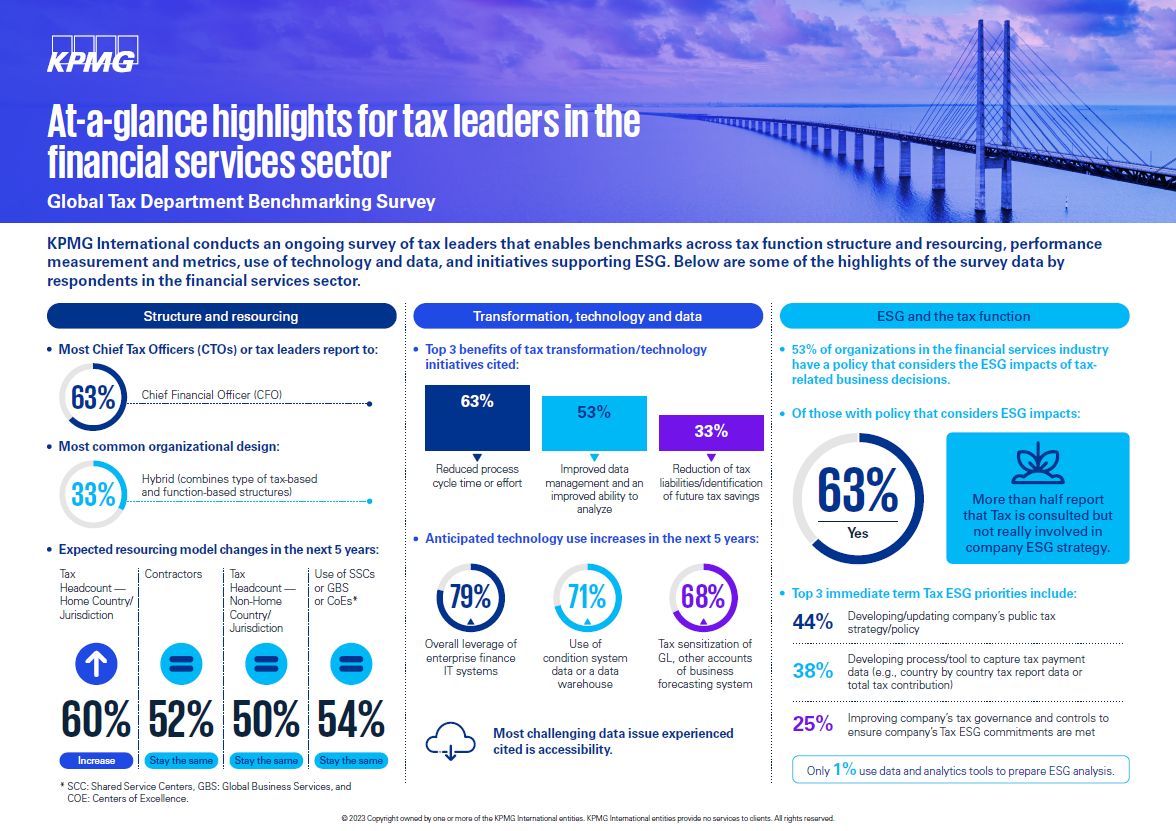
At-a-glance highlights for tax leaders in the financial services sector
Explore these highlights gathered from the 2023 Global Tax Function Benchmarking Survey.
Download PDF (389 KB) ⤓